

Musings from Students of the Pardes Institute of Jewish Studies in Jerusalem
Posted on December 19, 2010 by The Director of Digital Media
Posted on December 19, 2010 by Tamara Frankel
Dear Friends, Last week I was reading through the parsha and was struck by very familiar words, namely those of Jacob when he blesses Joseph’s sons, Efraim and Menashe. Sensing his death is near, Jacob beckons his grandsons to receive his blessing. יד וַיִּשְׁלַח יִשְׂרָאֵל אֶת-יְמִינוֹ וַיָּשֶׁת עַל-רֹאשׁ אֶפְרַיִם, וְהוּא הַצָּעִיר, וְאֶת-שְׂמֹאלוֹ, עַל-רֹאשׁ מְנַשֶּׁה: שִׂכֵּל, Continue Reading »
Posted on December 18, 2010 by Joel D.
Not sure how to react to this video. Flash Mobs can be a fun creative way to turn the world into a musical, and they represent a peaceful method for protest. Would it be better if all anti-Israeli protests were done in this fashion rather than in boats trying to set off a violent attack? Continue Reading »
Posted on December 17, 2010 by Barer
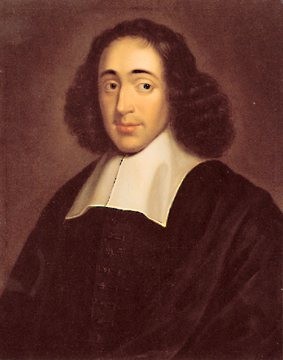
This week at Pardes we looked at issues of separatism in Judaism, from the extremely current issue of the letter banning rental of apartments to Arabs to the more theoretical ‘how should Judaism treat those outside of its (exclusive) community?’ We also had a guest speaker talk about how Jews have viewed other religions in previous time periods, specifically how Rabbi Jacob Emden (1697-1776) views Christians in relation to the Jewish community.
The key takeaway from our discussion of the story that took over much of the news during the end of Chanukah was not just that the halachik basis on which the rabbis who signed the letter based their arguments was spurious. More importantly, we must remember that no one has the right to make a claim on behalf of Judaism as a whole. The tradition is too complex, too multifaceted and containing too many values that can be put into tension with each other for there to be a single voice on almost any topic that represents all of Judaism.
Looking more theoretically at the same set of issues, it is clear to me that there is a serious ‘conflict of interests’ for many young North American Jews today being exposed to texts that purport that Jews are somehow special and deserving of recognition for that uniqueness, either by themselves or even by the wider communities in which they live. I have commented previously about my views on Jews being “a light unto the nations.” How one relates to that question says a lot about how one will think that Jews ought to treat non-Jewish populations, both locally and abroad. An more positive way to look at spreading wisdom is that Jews should try their best to improve the world, which hopefully would encourage others to do the same, rather than implying that others do not have as much to offer. The fact is that, for most of us, we will always be part of many overlapping and sometimes contradicting exclusive communities, and that is simply part of the struggle of living in the modern world yet maintaining deep ties to the Jewish community.
Finally, I learned a little bit about the work of Rabbi Jacob Emden for the first time, and was struck by two things. First, the concept of a renaissance man seems like a forgotten ideal for the most part – or just simply impractical given the depth of knowledge that would be required to become an expert in more than one discipline – but I think that it should be reinvigorated when it comes to religion. We lack today religious leaders who are truly well read in religions other than their own. Second, I was intrigued that I, nor anyone else who attended the lecture, had never heard of Rabbi Emden. The Jewish tradition has so many gems, even just talking on a textual basis, which are rarely discussed or studied. But I couldn’t help but wonder if his views on Christians – that they should be respected and thanked for helping to spread ‘morality’ much more effectively than Judaism ever did – have played a role in his not being included in the traditional Jewish ‘canon’ of rabbis and thinkers that the mainstream of Jewish students are exposed to.
Special thanks to Meesh, Rabbi Wayne Allen, and David Bookbinder, for teaching me (and others) about all the topics mentioned in this post.
Posted on December 16, 2010 by Avi Strausberg
on the closing of beresheit, the first book, and the opening of shmot, the second, i wanted to put side-by-side two haikus. the one through which i opened beresheit and one to reflect on the story of what’s been told. we’ve come along way in a few months. from the darkness and the divisions of Continue Reading »
Posted on December 15, 2010 by Zach
After the overview of my Chanukkah break, I wanted to go into a bit more depth about one of my day excursions. A good friend of mine, Zak, a Palestinian Christian who owns a shop in the old city, and I were talking, and I mentioned that I wanted to see some of the West Continue Reading »
Posted on December 14, 2010 by Drew
Crossposted from Jewschool and the J Street U Blog “Zion shall be redeemed with justice, and those that return to her in righteousness.” —Isaiah, 1:27 Three years ago I moved to Jerusalem. I grew up as an involved member of the Reform movement in Connecticut, spent my college and post-college years working in Jewish education Continue Reading »
Posted on December 14, 2010 by Shibley
I am devout sports fan, it’s probably fair to say that there is some sort of addiction. I knew it would be more difficult to follow my local teams, as well as the leagues at large whilst in Israel. This evening as I was walking on Emek Refaim, the main street in the section of Continue Reading »
Posted on December 13, 2010 by Joel D.
Posted on December 13, 2010 by Barer

I’d like to focus on something I mentioned very briefly in my overview of Chanukkah which has been coming up in my mind as I consider life back home: namely, Hityavnut or Hellenization, or what would today be called assimilation.
The word gives varied messages manifested in different languages. Hityavnut is an example of a word that I find to have a different and deeper feel to it in Hebrew than its counterpart in English. “Greekify” hardly implies assimilation, and yet that is what Hityavnut would mean, on an extremely literal level. But that is not the most noteworthy part of this Hebrew word. Rather the fact that, as far as I could tell being around Israelis discussing issues of modern assimilation, Hityavnut is a word that means not only Hellenization (only meaningful in the context of discussing the Chanukkah story) but its modern meaning is also assimilation. I guess this could just be me falling for the allure of a language whose words encapsulate the history I learned growing up in Jewish day school, but which had no connection to the language I was speaking. I find it fascinating that I can understand the meaning of Hityavnut without understanding what the denotation of the word ‘assimilation’ as long as I know the Chanukkah story; English has nothing like it.
Returning to the content of this appealing Hebrew term, I have what amounts to a simple concern about living in a Jewish and a secular world simultaneously. Can one live in both worlds without being swayed ‘too much’ by either? What is ‘too much’? Can one have purely secular, non-Jewish interactions as well as purely religious, Jewish interactions and still keep all the varying world-views and lenses together in one’s head? While such questions have undoubtedly been asked endlessly by anyone who is not content to live in exclusively Jewish surroundings their entire lives, each time, and for each individual, it is slightly different based on each individual’s circumstances.
What should one’s goals be in living simultaneously in both worlds? The discussion with Israeli teenagers mentioned the Westernization of Israel in ways exemplified by the prevalence of Gap stores and other Americanized companies, and the fact that they are in English for the most part. No doubt language is more than the sum of its parts, and losing a language means so much more than losing the words, as the example of Hityavnut shows. But if recent news is any indication, we need more people that are deeply aware of more than one culture’s needs and concerns.