[Alumni Guest Post] Toward God’s Love

R. Julie Gordon (PEP '12) recollects:

Here are some of my thoughts after my experience davenning with Women of the Wall (WOW) on May 10, 2013.

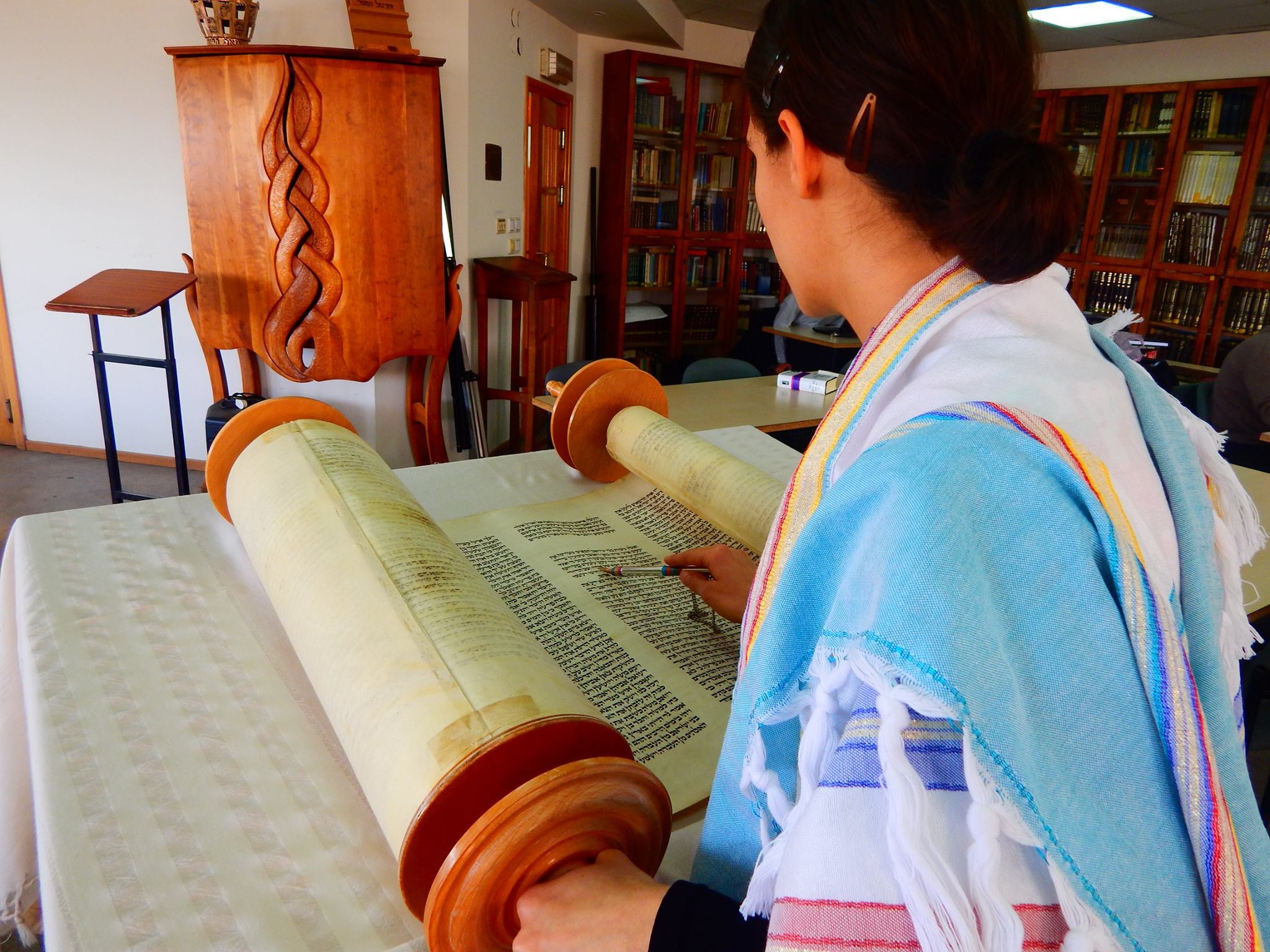
Rabbi Julie Gordon praying with Women of the Wall

Rabbi Julie Gordon praying with Women of the Wall

I was exhilarated on the day after my bat mitzvah when I learned how to lay tefillin through the wisdom and care of Bert Cooper, z”l, our Albert Lea, MN para-rabbi. I felt empowered and joyful. Safely ensconced in our community and our shared relationship with God. My Baba had given me my Zayde’s tefillin. On that day when I held them in my hands, we both cried. She said, “Zayde would be so proud that you will be using his tefillin as he laid tefillin six days a week.” I remember those words every day as I wrap them around my arms, even now 40 years later, the soft leather straps worn thin and replaced twice. The scrolls checked and rechecked by sofrei stam. I am the only person on my mother’s side of the family who lays tefillin and I do it with care.

Last week, on my 56th birthday, I was preparing to lay my Zeyde’s teffilin, and to wrap myself in his memory, as I feel commanded to do this mitzvah. But, for the first time, I felt afraid. Continue reading

Share

Enlisting the Torah: My Encounter Trip Reflection

Our bus returned to Jerusalem an hour before Shabbat candle-lighting time. I quickly biked home to shower and light the candles before heading out to my friend’s place for dinner. It was only at twilight, while walking along the Rakevet (the old railroad tracks that cut across the south Jerusalem) and reading from a commentary on the week’s Torah potion, that some of what I had seen and experienced in the West Bank earlier that day started to come into focus. I was struck by the poignant connection between the week’s parsha and my day’s immersion into The Conflict.

398632_4407309425380_61578554_n

The passage was “Behar” in the book of Leviticus, which deals mainly with the laws surrounding the Shemitta (or Sabbatical Year) and the Yovel (or Jubilee Year). The Torah commands that every seven years the land is to lie fallow, and any fruits that the land produces by itself are to be shared equally with all. And after seven cycles of the Shemitta, or every fifty years, the Yovel is celebrated and all lands are to revert back to their ancestral owners. The commentary I was reading, written by Rabbi Michael Hattin in his book “Passages,” said that what we are to spiritually take away from this practice is that we must frequently “relax our grasp on the illusion of physical permanence that land possession affords.” Continue reading

Share

אחד – ONENESS

From my blog:

Am I awake or asleep? Maybe a dreamlike state in between the two.

I leave my apartment 4:45 am to continue my journey

But all I am thinking about is my bed, snuggling between my warm blankets, head on my pillow. But then I thought of the people who used to walk, to travel for days, weeks during THIS day to get to the Beit haMikdash (the Temple) and I figured I could suck up the half an hour walk to the Kotel.

I didn’t even have to really pay attention to where I was going, I followed the people, each person coming from his/her home, learning center, dressed all differently, to walk to the same place.
Continue reading

Share

The Reason that my Tallit Belongs at the Kotel

Reflections on Rosh Hodesh Sivan with Women of the Wall, 5773 – 2013

Throughout the year I have studied here in Jerusalem, I have learned that the Wall has its own identity crisis. It is part of a larger structure that was built and carried, lost, built again and then destroyed, and built again, and built over again and destroyed again. There are more stages in between of deeper and deeper details. The figurative symbol of complete purity, it was more often an embodiment of utter corruption. The man who inspired the design of the particular Wall before which we stand today was a gifted, paranoid maniac, maddened by grief and riches and conflicting loyalties. The Temple itself, and the Wall it became, changed owners and took on ideologies of shocking variance over the centuries. And yet here it still stands, a testament to physical stability, containing all of its tumultuous history behind the serenity of its stones.


On the first Shabbat I was in Jerusalem, I walked with a group of very new friends into the Old City for the first time. I knew nothing about it except that it was the last of the Temple, a remnant of a Judaism from long ago, one with which I had trouble relating, but that it was “supposed to”, maybe, inspire a surge of feeling within me. Perhaps a feeling of closeness to the Divine? Perhaps an intense unification with the Jewish people? Perhaps bafflement or even, perhaps nothing? I was curious, and determined not to judge whatever feeling arose. Continue reading

Share

Rosh Chodesh Sivan 5773 at the Kotel

I went to the Kotel on Rosh Chodesh Sivan expecting to pray, and I did. I was surprised that I could focus on prayer in the volatile atmosphere; the hullabaloo made me concentrate even harder than usual. “Ozi v’zimrat Yah” never had greater meaning for me than it did on Friday morning as I stood with several hundred women and men on the Kotel plaza, praying for the welfare of the world in the new month of Sivan.

I came to welcome the month and to celebrate the new court ruling that allows women to pray in tallitot and tefillin at the wall. What a wonderful reason to rejoice: I could sing, dance, wear a tallit, and not fear arrest! Even though the government is discussing the Sharansky plan, I am convinced that the Women of the Wall need to continue to pray as they have for the last 25 years until a viable long-term plan is realized. Those who oppose my presence as a praying woman in a tallit do so because Continue reading

Share

Rosh Chodesh Sivan at the Kotel

From my blog:
Watch the actual video: here.

Watch the actual video: here.

Friday morning was a blur. A scary blur. I didn’t wake up until 6:24 AM when my roommate screamed, “WIESE.” And I jumped out of bed, how could this happen, on a day that was so important to me? Never mind…we jumped in a taxi and I ran down to the women’s section with my bag. I couldn’t even get to the regular spot because there was a sea of light blue shirts of seminary girls from all over Israel. I quickly realized that they had been bussed in for the exact opposite reason I was there. I ran into my dear friend, and later saviour, Melissa. She was also lost. We didn’t know where “Women of the Wall” (WOW) was praying because there wasn’t space where they normally gather. (Smart thinking ultra-orthodox girls…if there isn’t space, maybe they can’t pray at the Kotel. Makes sense.) We went down together into the sea of blue, maybe they were there somewhere. They weren’t. But it was time to daven, so Melissa started pezukei dezimra (the “warm up” blessings, as I like to call them,) while I started to put on my tefillin. It was worse than the paparazzi that normally come to women of the wall. The girls thought they were seeing an alien or the devil…it was true what their rabbi told them, there are women who put on tefillin! They started taking pictures of my and then scuttled away, they didn’t want to be too close, maybe I could contaminate them. Many were already tisking at the action. But then, I pulled out my tallit (I know I should put on my tallit first and then tefillin, but there isn’t a lot of space and it’s difficult, so I reverse the order,) it was like poison. The girls backed away like if touching it would burn them, or something worse. They started making this hissing noise, I have never heard such a frightening/bizarre noise in my life. No one wanted to talk to me, it was too shocking to them. And I was there alone with my tallit and tefillin. I still didn’t know where the other women were. Melissa had finished pezukei dezimra and she looked at me, we knew we had to get out of there. It wasn’t safe. I was already flustered. Melissa, calm and cool, Continue reading

Share

Paying a price

From my blog:

This week, in Israel, has been particularly focused on the costs of establishing an idealist state in a previously inhabited plot of land. I’m not trying to dig too deep into the politics of it; rather I’m interested in the idea of the prices we pay to live where we do.

After all Carlos Arredondo, brought back into the public eye by the current tragedies in Boston, has paid high prices. It is not an infrequent thing, the terrible burdens families bear on their backs for their communities, for their countries.

This past Sunday, at my Yeshiva, we had a panel of faculty speaking about their personal Israel narratives. They spoke as individuals and then in a dialogue. In light of today’s theme, I’d like to highlight what Leah Rosenthal said.  Continue reading

Share

Present and Accounted For

Naomi Minsky (Year '13, PEP '15) came to Pardes this year
for the Year Program, and will be returning next year as a
member of the Pardes Educators Program!

nmSince my teenage years I secretly wanted to pursue a career as a doctor. This is not because I am scientific and enjoy learning about the human anatomy. In fact, I go into panic-mode at the sight of blood. I was attracted to helping others live life to the full. Thankfully I have found an alternative route to achieve my aim.

Unlike medicine Jewish education does not literally save lives. However, it supports people to have meaningful experiences and relationships. It is a way to help others appreciate Judaism and approach it with confidence. My Bat Mitzvah involved facing the community and saying the shema prayer. The whole time I looked directly at my grandparents. They were sitting in the front row saying the words back to me. I am indebted to my Jewish education teaching me that the shema is an affirmation of Jewish identity and love of G-d. I felt the beauty of the experience as I was connected to my family, community and religious tradition simultaneously. Jewish identity today is multifaceted, for some it is Continue reading

Share

[Video] One Wish Jerusalem

One Wish Jerusalem is a reminder of and a tribute to our shared humanity. Shot in one day, in Jerusalem, we invited everyone who passed us at the outdoor market and the Old City to share a wish: an honest, human wish. In a country and a city often highlighted for the complexities and conflicts that arise from a divergence of dreams we invite you to connect to the beauty that is our shared ability to dream. To believe. To hope. To wish.

In commemoration of Israel’s 65th Anniversary of Independence we invite you to celebrate and to reflect with these faces in mind. To remember that independence is Continue reading

Share

Unexpected Encounters: Jewish Holidays and the Other: Yom HaAtzmaut

Pardes is pleased to present the second episode of our new podcast series by Rabbi Daniel Landes, Unexpected Encounters: The Jewish Holidays and the Other. This episode is on Yom Ha’atzmaut.

Episode title: Yom Ha’atzmaut and the Naqba–Is a Jewish Theology of a Palestinian State Possible?

Pardes thanks the Alexander Soros Foundation, the sponsor for the series.

Click here to listen

Click here for the accompanying handout.

Share