Quietly Back and Possibly Blue

From my blog:

Forty-eight hours ago, I was in a different country. And no, I did not drive across the border from Mexico to Texas.

01

During the past few weeks, I’ve done a lot of personal journaling, because a lot of what’s happened is just that – very personal. Consequently, less has ended up on the blog, but that is also a product of me being in a state of tightly-timed transition. I’ve been thinking, remembering, noting, and observing, but I haven’t had time or courage for true for reflection yet.

One thing I’ve noticed is that, in the day-and-a-half since I’ve been back, I’ve been in a bit of a shell. I texted my closest friends as soon as I reached JFK, but have been inconsistently answering their texts in the hours since. I’ve told a lot of people that I want to see them, but haven’t set many dates or times yet. I’ve resisted Continue reading

Share

So Many Ways

It is so hard to believe Annie and my year in Israel is already over! We are sitting in our hostel room in Tel Aviv, taking in the sounds of the city, as we contemplate returning to Toronto, changed in so many ways.

This year has been a year with so many different facets. Challenging, exciting, tiring, renewing… It has really been a year of rebirth for us, clearing out a lot of hard stuff to make room for growth as we uproot our lives here in Israel and put down roots back in Canada. Annie and I finished our time in Jerusalem with a visit to the Kotel… As we were about to leave, I looked back and realized that this would be the last time for a long time that I would be so close, and how grateful I was for the opportunity. What I thought in that moment was Continue reading

Share

The Reason that my Tallit Belongs at the Kotel

Reflections on Rosh Hodesh Sivan with Women of the Wall, 5773 – 2013

Throughout the year I have studied here in Jerusalem, I have learned that the Wall has its own identity crisis. It is part of a larger structure that was built and carried, lost, built again and then destroyed, and built again, and built over again and destroyed again. There are more stages in between of deeper and deeper details. The figurative symbol of complete purity, it was more often an embodiment of utter corruption. The man who inspired the design of the particular Wall before which we stand today was a gifted, paranoid maniac, maddened by grief and riches and conflicting loyalties. The Temple itself, and the Wall it became, changed owners and took on ideologies of shocking variance over the centuries. And yet here it still stands, a testament to physical stability, containing all of its tumultuous history behind the serenity of its stones.


On the first Shabbat I was in Jerusalem, I walked with a group of very new friends into the Old City for the first time. I knew nothing about it except that it was the last of the Temple, a remnant of a Judaism from long ago, one with which I had trouble relating, but that it was “supposed to”, maybe, inspire a surge of feeling within me. Perhaps a feeling of closeness to the Divine? Perhaps an intense unification with the Jewish people? Perhaps bafflement or even, perhaps nothing? I was curious, and determined not to judge whatever feeling arose. Continue reading

Share

Rosh Chodesh Sivan at the Kotel

From my blog:
Watch the actual video: here.

Watch the actual video: here.

Friday morning was a blur. A scary blur. I didn’t wake up until 6:24 AM when my roommate screamed, “WIESE.” And I jumped out of bed, how could this happen, on a day that was so important to me? Never mind…we jumped in a taxi and I ran down to the women’s section with my bag. I couldn’t even get to the regular spot because there was a sea of light blue shirts of seminary girls from all over Israel. I quickly realized that they had been bussed in for the exact opposite reason I was there. I ran into my dear friend, and later saviour, Melissa. She was also lost. We didn’t know where “Women of the Wall” (WOW) was praying because there wasn’t space where they normally gather. (Smart thinking ultra-orthodox girls…if there isn’t space, maybe they can’t pray at the Kotel. Makes sense.) We went down together into the sea of blue, maybe they were there somewhere. They weren’t. But it was time to daven, so Melissa started pezukei dezimra (the “warm up” blessings, as I like to call them,) while I started to put on my tefillin. It was worse than the paparazzi that normally come to women of the wall. The girls thought they were seeing an alien or the devil…it was true what their rabbi told them, there are women who put on tefillin! They started taking pictures of my and then scuttled away, they didn’t want to be too close, maybe I could contaminate them. Many were already tisking at the action. But then, I pulled out my tallit (I know I should put on my tallit first and then tefillin, but there isn’t a lot of space and it’s difficult, so I reverse the order,) it was like poison. The girls backed away like if touching it would burn them, or something worse. They started making this hissing noise, I have never heard such a frightening/bizarre noise in my life. No one wanted to talk to me, it was too shocking to them. And I was there alone with my tallit and tefillin. I still didn’t know where the other women were. Melissa had finished pezukei dezimra and she looked at me, we knew we had to get out of there. It wasn’t safe. I was already flustered. Melissa, calm and cool, Continue reading

Share

[Alumni Guest Post] Fine Dining in the Shuk: Jacko’s Street

X-posted from Foodist Jerusalem,
Written by Anna Melman (Year ’05, Fellows ’06)

This is a great blog to follow if you're looking for
good food in Jerusalem!

When I first moved to Jerusalem, the shuk was dead at night. This made sense, since it was mostly a fruit and vegetable and meat and fish market. I remember back in 2005 or 2006 thinking that Bashar (the cheese store) could make a killing if they stayed open late one night a week for wine and cheese tasting. At the time this idea seemed ludicrous since the shuk was a ghost town at night. There were a few restaurants (and of course the steakiyot) on Agrippas. But I’d say that just in the past 4 or so years has the shuk area really become a place with a plethora of interesting dinner options. One day I hope to write a post talking about dining options in the shuk. For today though, I’m going to focus on the newest option, Jacko’s Street, which is located at the bottom of the shuk around the corner from Rachmo and Mousseline.

Jacko’s Street opened about a month ago (maybe less?), promising the finest kosher dining in the neighborhood. Before we went, we heard a lot about the atmosphere and the ambiance and of course the food. Without giving too many spoilers before the meat of my post, Continue reading

Share

Dr. Micah Goodman: “What the Israeli elections teach us about Israeli society”

mgJust a couple weeks ago, Dr. Micah Goodman of the Ein Prat Academy visited us at Pardes to address the student body at shiur clali.

His insights into Israeli society were stimulating and refreshing. His analysis, based on the election results, that Israeli society is moving towards Jewish pluralism and openness was inspiring and very much complemented what I have been studying in my Modern Jewish Thought class. In that class, we have explored the tension between the particular and universal aspects of Judaism. Micah pointed out that as more secular Israelis learn Torah, Continue reading

Share

The Magic Touch

From my blog:

Sometimes, a simple touch can make all the difference.

Hugging one of my best friends.

Hugging one of my best friends.

In the Jewish world, some girls don’t touch boys. Some girls touch some boys. Some girls touch only one boy, and everyone hugs their mother. As a part of this world, I have become especially attuned to the presence and absence of human touch.

In high school, I thought nothing of it. I hugged my friends (girls and guys) and high-fived with abandon. The one time I was asked to go out of my comfort zone was when playing Anne in The Diary of Anne Frank. Every knows about Anne and Peter, and my director had the specific idea that the kiss had to be long – very long. Continue reading

Share

“Aftermath”

I sit on a hill, overlooking Gaza Strip, so near yet so far. It seems almost peaceful. No planes in the air, no fires, no pillars of smoke. Just the sound of vehicles on the highway below. If I didn’t know better, I’d think I was looking at another Israeli town. You’d think there was no conflict, no ongoing war, no recent operation. Just peace and quiet.

I pass through Sderot, and it’s even more absurd. With a few minor and old exceptions, everything’s been cleared and patched up. You wouldn’t know by looking that this town has been bombarded for over a decade.

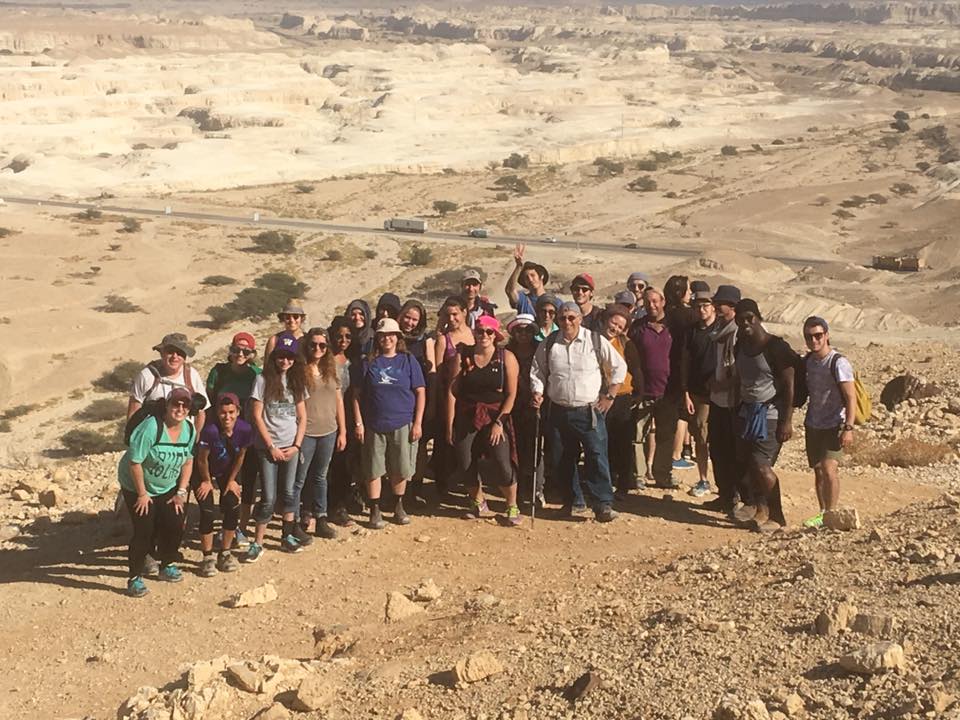
And I’m back on a tiyul, back where it started last time. So much time has passed in the last 9 weeks. I’m back and I’m as lost and as out of place as ever.

So I do what I do best: I push myself, add challenges, drive myself harder, carry more weight, more bags, punish myself. And it works, for a bit. Until the late night conversations start, the drinking, the chain smoking. Anything and everything to distract myself.

It’s beautiful, amazing, majestic, and it is no longer mine. The once familiar trails have become foreign, a burden, a source of worry. The people that in such a short time had become family are now kept at arm’s length, for their sake as much as my own.

It’s never over for me, for my kind. Things change: politics, borders, conflict locations. But for us, peace will never come.

Because long after the world has forgotten, we continue to live with the memories, in the aftermath of something that was always bigger than us, yet exclusively ours…


This is the last of the series of pieces written during and after Pillar of Defense… Hopefully I’ll have more positive things coming soon… I’d like to thank the entire Pardes community for all the love and support over the last couple of months, thank you for being there, for not letting me sink or give up!!!

Share

It’s Complicated

I can’t speak highly enough of Ben Barer (Fellows ’12), and I am consistently appreciative of his blogging. His recent post on ‘Picking Our Battles’ gave me pause because Ben and I agree on many things, but we’ve chosen different sides of the “Orthodox Community” – he’s chosen to be outside of it, and I’ve chosen to be inside of it.

In his recent post, Ben wrote:

“In order to make some of the changes that I can only dream of experiencing in my own lifetime surrounding issues of gender acceptance, and eventually, equity, in Judaism, I often feel the need to fight from the inside [the Orthodox Community].”

In response, I must say that even as a self-identified, halahically observant member of the “Orthodox Community”, I hardly expect that my affiliation has empowered me personally to “make some of the changes” that Ben and I would both like to see. My response to Andrea Wiese’s (PEP ’14) post, in which she describes her struggle to accept the role of women in the Orthodox community, would be no different. Continue reading

Share

[Alumni Guest Post] Picking Our Battles

Posted by Ben Barer (Fellows '12):

When you stop to consider the problems plaguing our world (now, as in any other time in history), it can be daunting to the point of being immobilizing. How can I possibly choose, based on such imperfect knowledge, where to most effectively apply myself, and, even if I do, how can I know that I will make any difference — all the while struggling to make ends meet and taking on the stresses of many other people?

I think a large part of the answer to the first question — what cause to take on — is a matter of reformulation. You do not choose a cause so much as the cause chooses you. It is naive to hope that you can choose the cause that ‘needs the most help’ in the world today, and then PRESTO you find the energy to devote yourself to that cause night and day, for decades. We were all born and raised with different skills, predilections, and goals. One of the toughest challenges for me is accepting that I can only be effective at a cause that calls to me before seeing it on a headline.

This was the struggle I had after reading a recent piece in Ha’aretz about the growing phenomenon of Orthodox Jewish women being granted a status as halakhic decisors, ‘almost’ on a par with rabbinic ordination. As women’s rights in all spheres, Jewish and otherwise, is a cause close to my heart, I am very happy to hear of such developments. When I read passages like this one, however, I am torn:

“Friedman [the woman who is the focus of the article] says she chose the Torah path in response to religious radicalization. ‘We were all jolted by the extremist rulings of Rabbi Shlomo Aviner and other representatives of fundamentalism not to rent apartments to Arabs in Safed, or modesty requirements for a three-year-old girl and the like,’ she says. ‘My heritage in the religious-Zionist movement was different. But if you want to sound a different voice, you have to do it from within’” (emphasis added)

I think that Friedman is right, and that is what troubles me. In order to make some of the changes that I can only dream of experiencing in my own lifetime surrounding issues of gender acceptance, and eventually, equity, in Judaism, I often feel the need to fight from the inside. Throwing one’s lot in with the Orthodox community, however, carries with it the consequence of largely shutting out the voices in the Jewish community who have already reached the desired goal, except as personal inspiration. Orthodox communities do not want to hear from non-Orthodox communities on issues of ritual change. The only voices that will be heard are those like Friedman’s. I am left to ponder whether that is the battle that is calling to me, or if there are other battles that might provide the same fire under my belly without such compromise.

Share